Ten Warning Signs of Potentially Unsafe Groups or Leaders
Based on the work of Rick Alan Ross
“Potentially unsafe groups or leaders ‘come off very nice at first, they go for vulnerable people who are looking for answers, lonely, what you’d call ‘normal people.’ They’re very good at what they do and can get people to believe anything. You might think you’d never get taken in, but don’t bet on it.“
– Margaret Singer, Ph.D.
Ten warning signs of a potentially unsafe group/leader
By Rick Ross, Expert Consultant and Intervention Specialist
Absolute authoritarianism without meaningful accountability.
No tolerance for questions or critical inquiry.
No meaningful financial disclosure regarding budget, expenses such as an independently audited financial statement.
Unreasonable fear about the outside world, such as impending catastrophe, evil conspiracies and persecutions.
There is no legitimate reason to leave, former followers are always wrong in leaving, negative or even evil.
Former members often relate the same stories of abuse and reflect a similar pattern of grievances.
There are records, books, news articles, or television programs that document the abuses of the group/leader.
Followers feel they can never be “good enough.”
The group/leader is always right.
The group/leader is the exclusive means of knowing “truth” or receiving validation, no other process of discovery is really acceptable or credible.
Permissions and Attribution Notice
The author of this material, Rick Alan Ross, granted written permission for use on March 9, 2012. Reproduction or copying of the contents of this article is not permitted. Linking to the original source is allowed, including sharing the following URL: https://culteducation.com/warningsigns.html
Full attribution: Ross, Rick. “Warning Signs.” Cult Education Institute, 1999–2014, Trenton, New Jersey. Accessed November 3, 2020. Retrieved from https://culteducation.com/warningsigns.html. Used with permission.
Thank you for taking the time to read. This is my new coaching website. Sharing is caring!
This website is intended to provide educational and informational content for individuals seeking to understand and process experiences of spiritual or emotional harm within church settings. We hold no ill will toward any Calvary Chapel churches, pastors, members, or other individuals referenced.
The information shared here is offered to support awareness, understanding, and hope, and to help individuals make sense of their experiences. If you believe that any information presented is inaccurate or incomplete, you are encouraged to reach out so concerns may be addressed in a constructive manner.
To maintain a respectful and supportive environment, comments or communications that include harassment, shaming, personal attacks, or dismissive language may be removed. Our goal is to encourage dialogue that is respectful, factual, and mindful of the impact words can have on others.
Thank you for your cooperation and commitment to civil and respectful engagement.
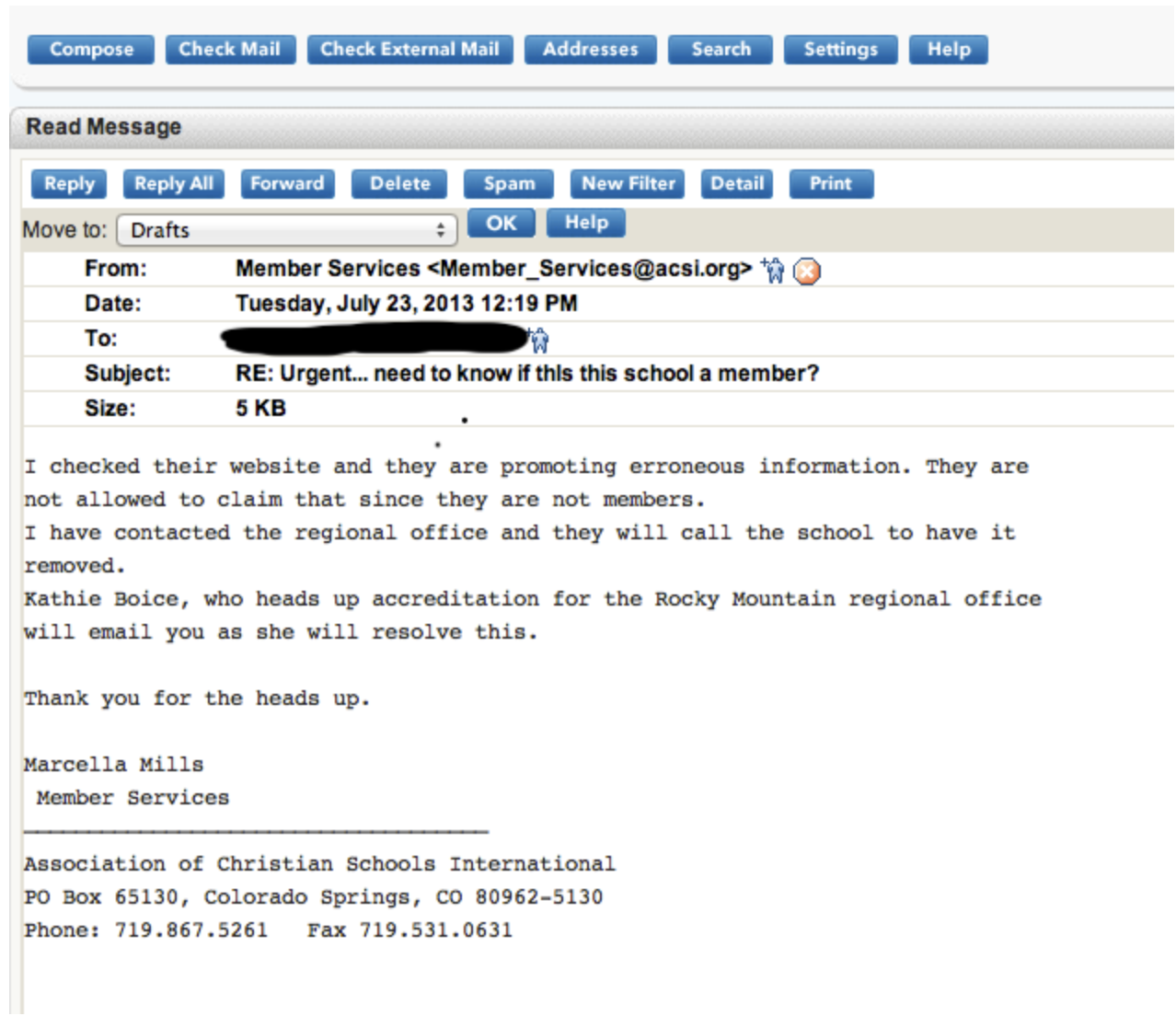
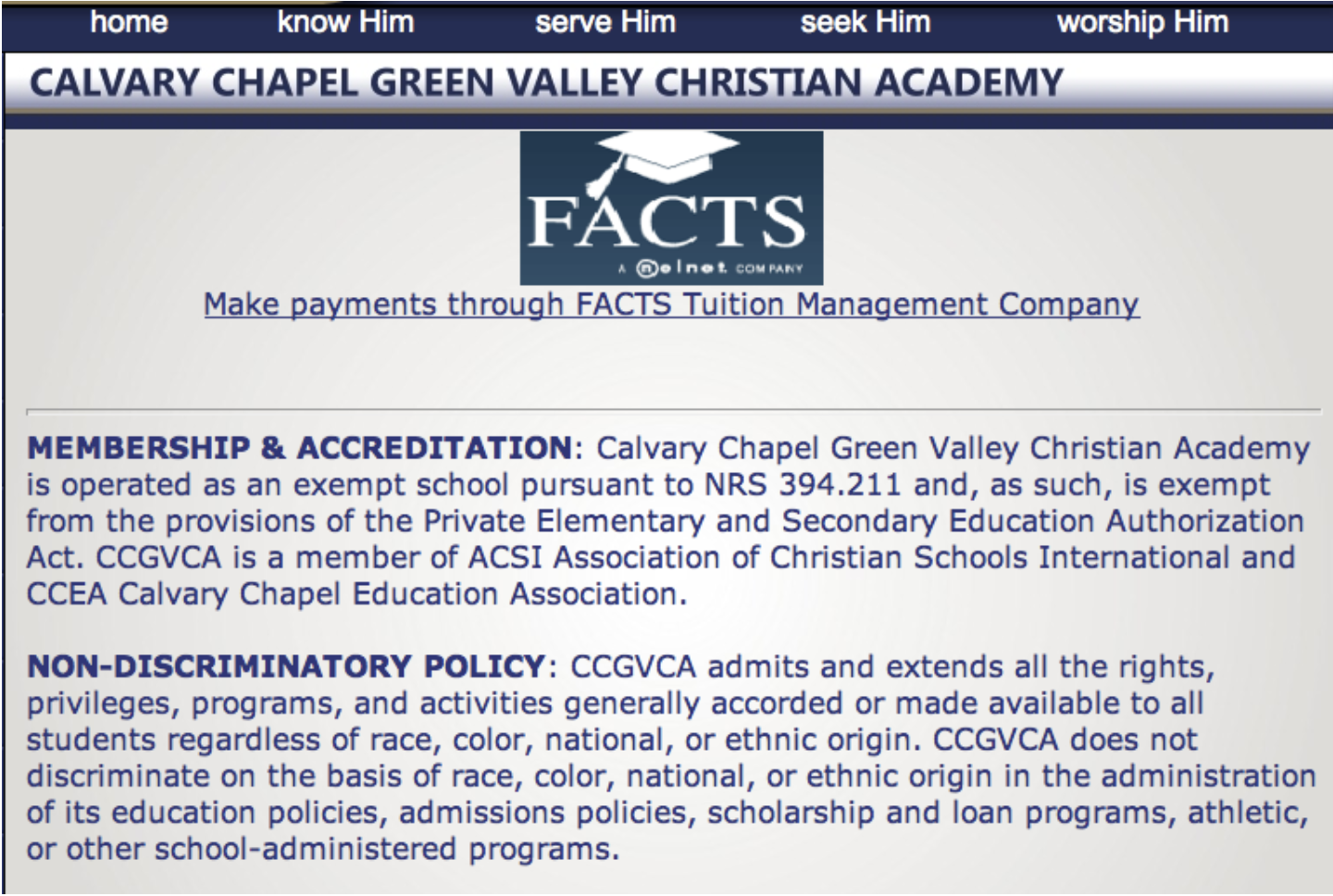
Screenshot of an email dated July 23, 2013, from Member Services at the Association of Christian Schools International (ACSI), stating that the organization had reviewed the church’s website and determined it was “promoting erroneous information” and making claims it was not authorized to make, according to the ACSI representative.Screenshot of the Calvary Chapel Green Valley Christian Academy website, dated July 23, 2013, displaying statements regarding membership and accreditation, including a claim of membership with the Association of Christian Schools International (ACSI).
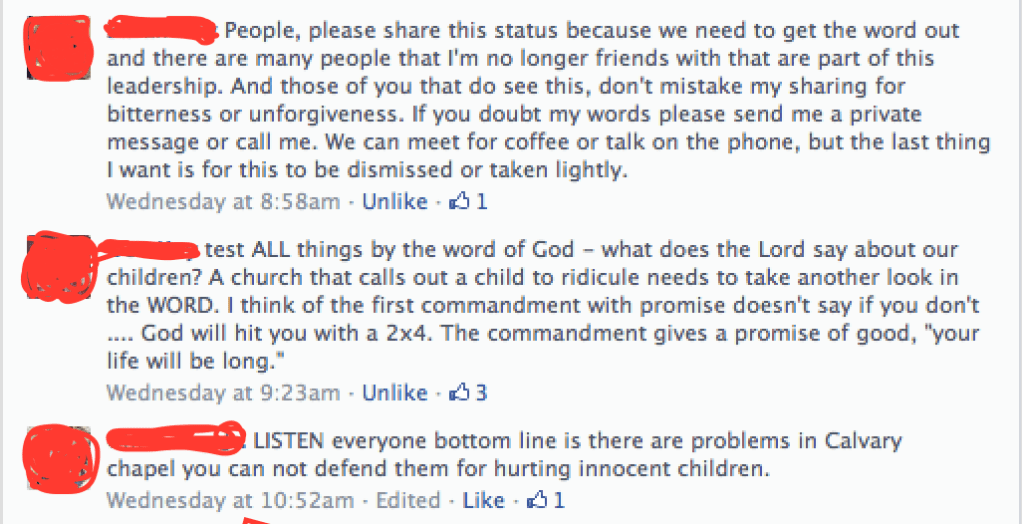
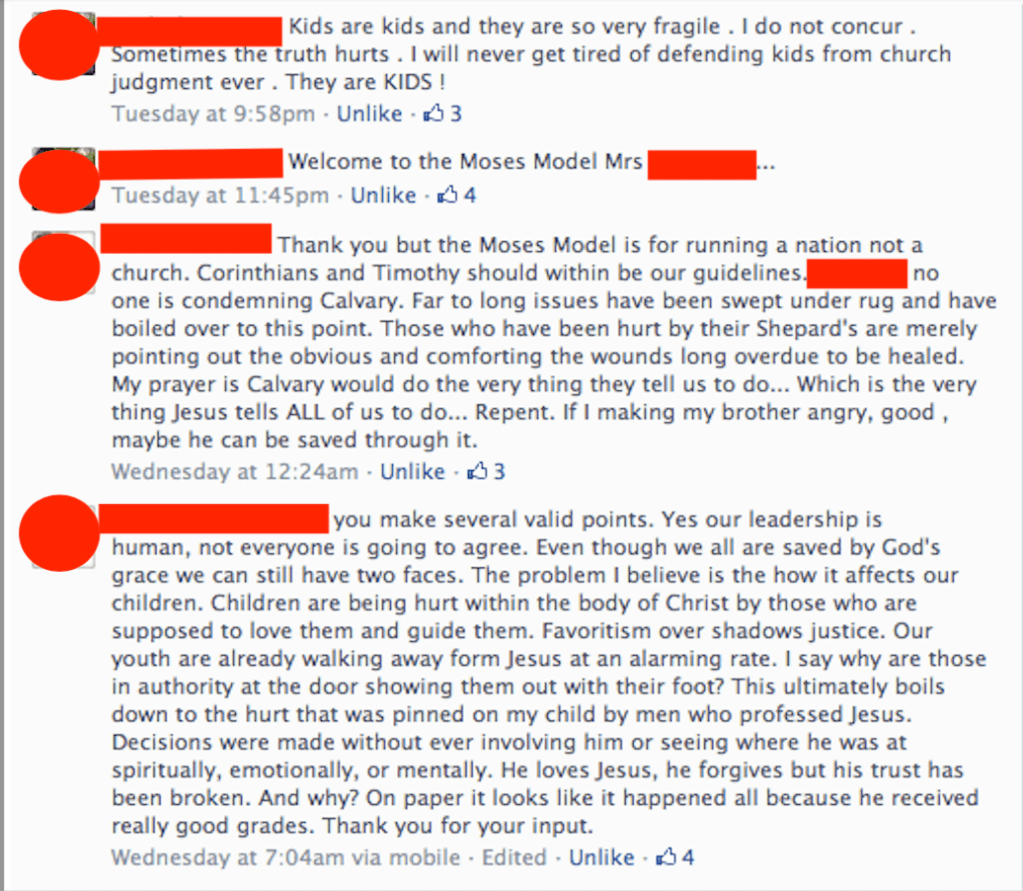
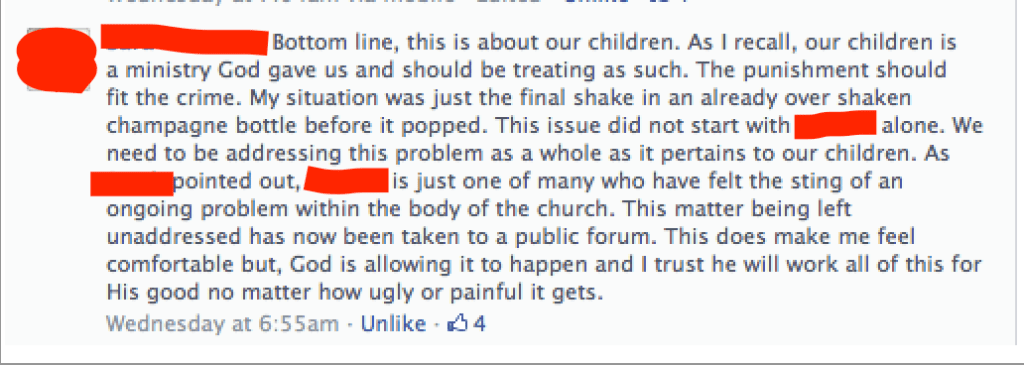
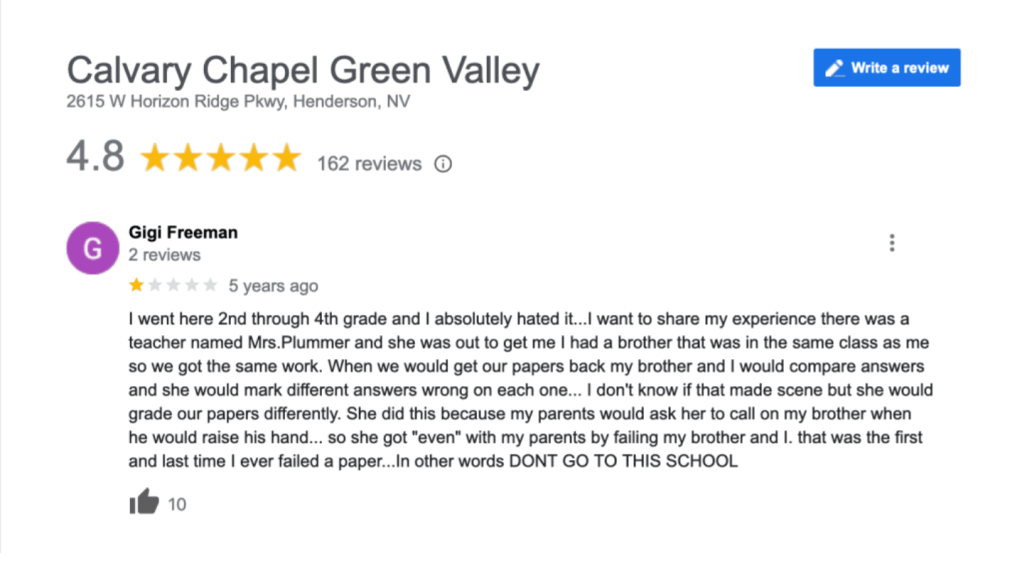
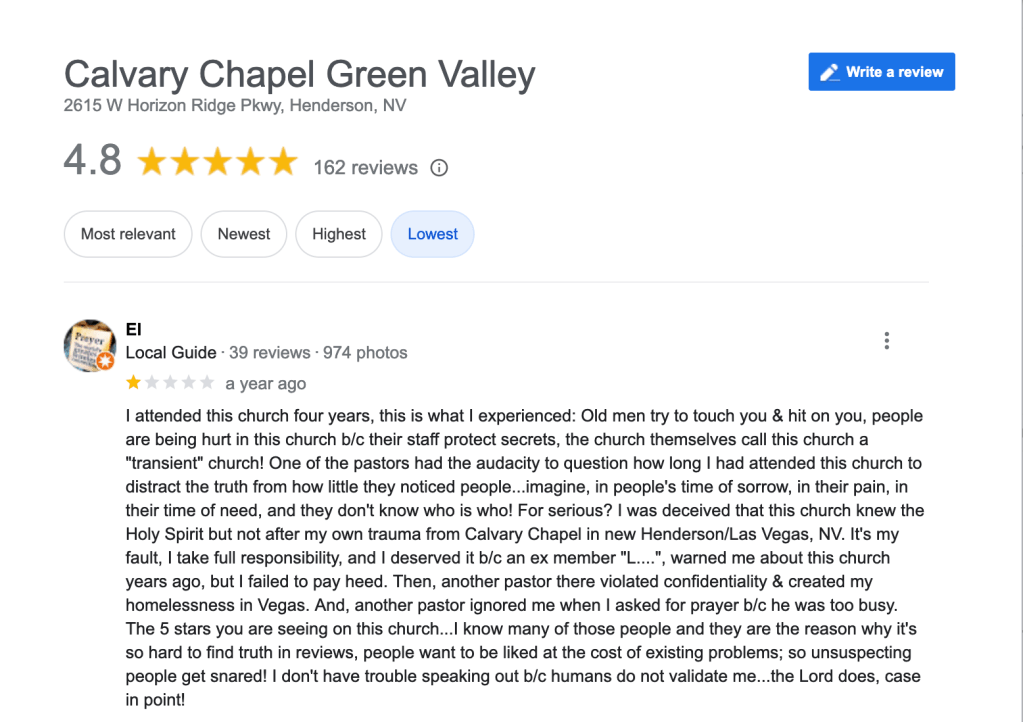
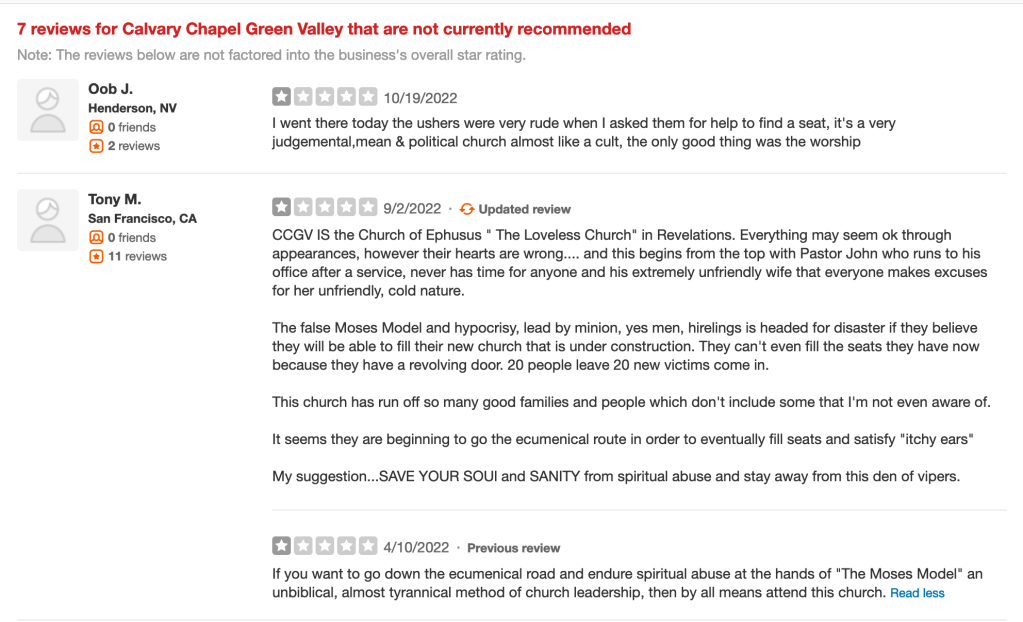
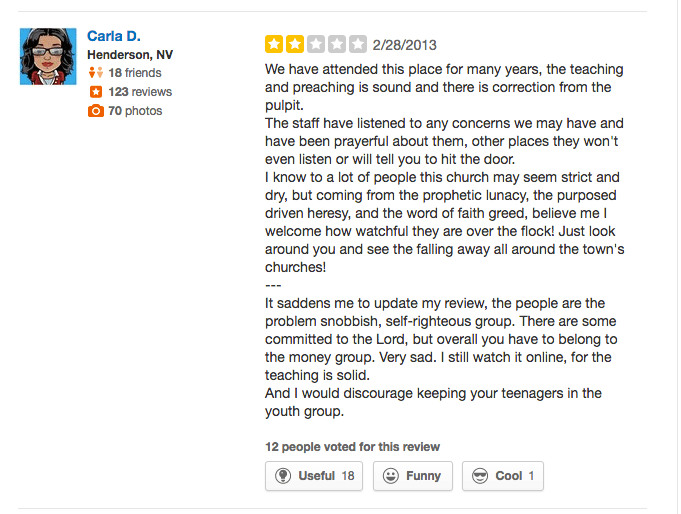
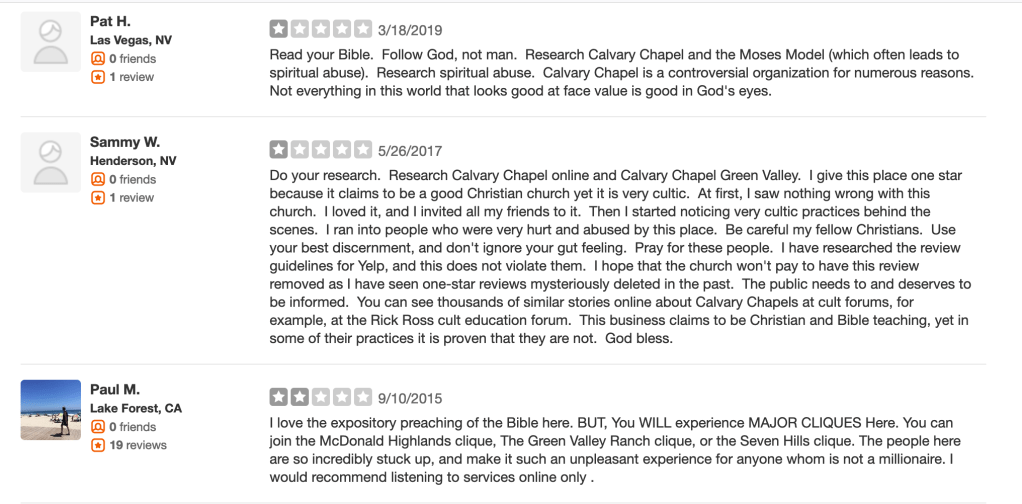
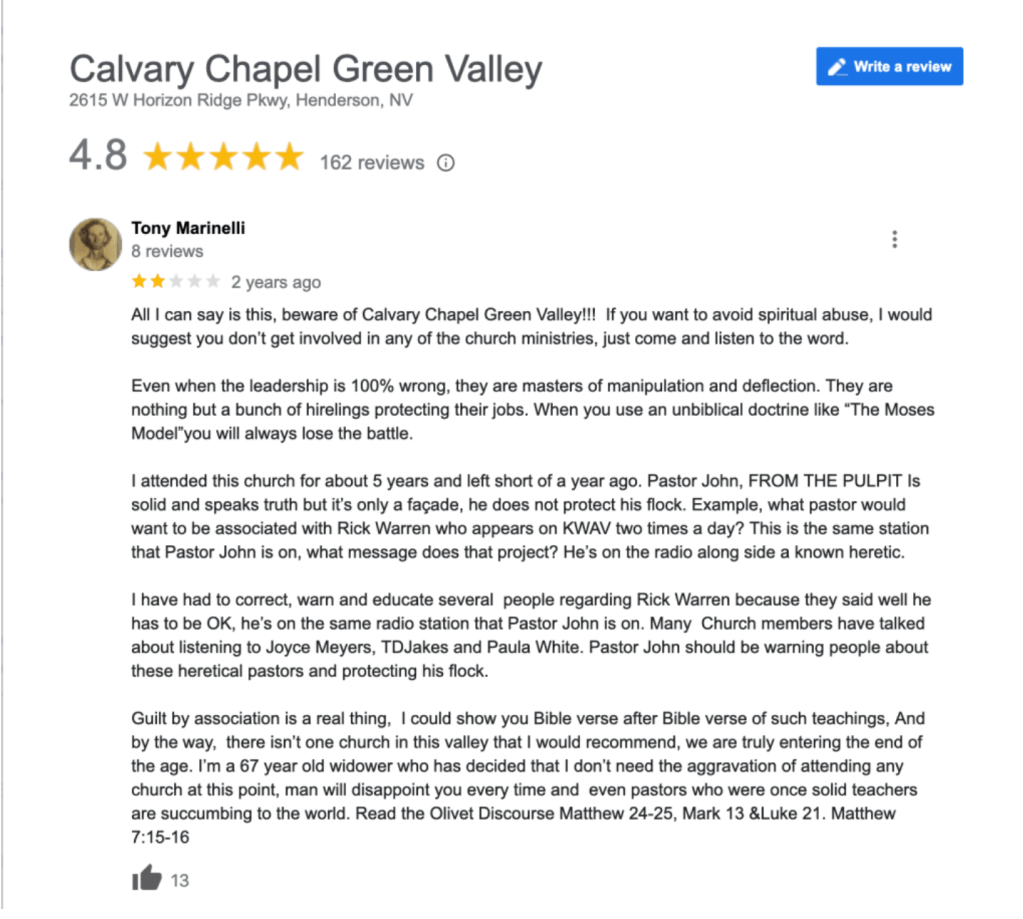
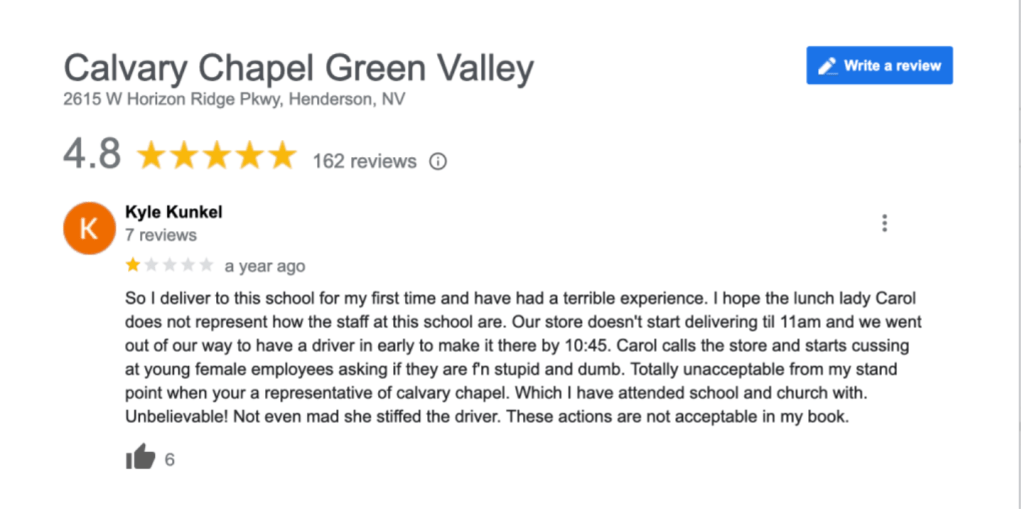
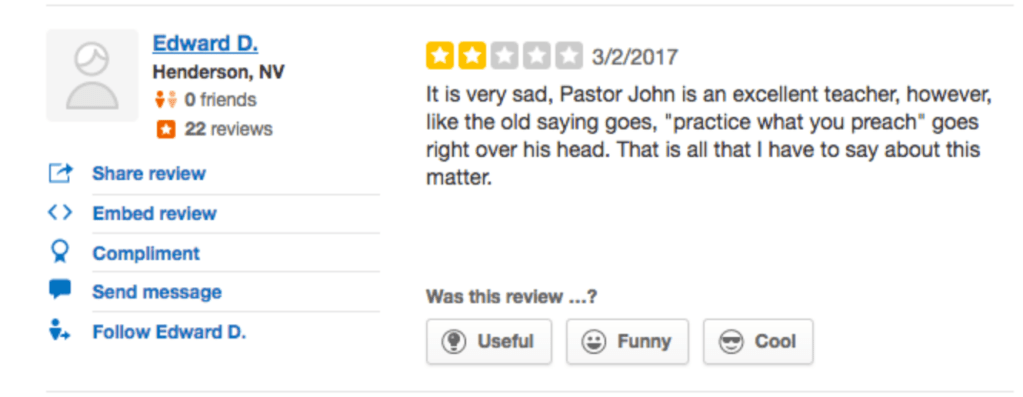
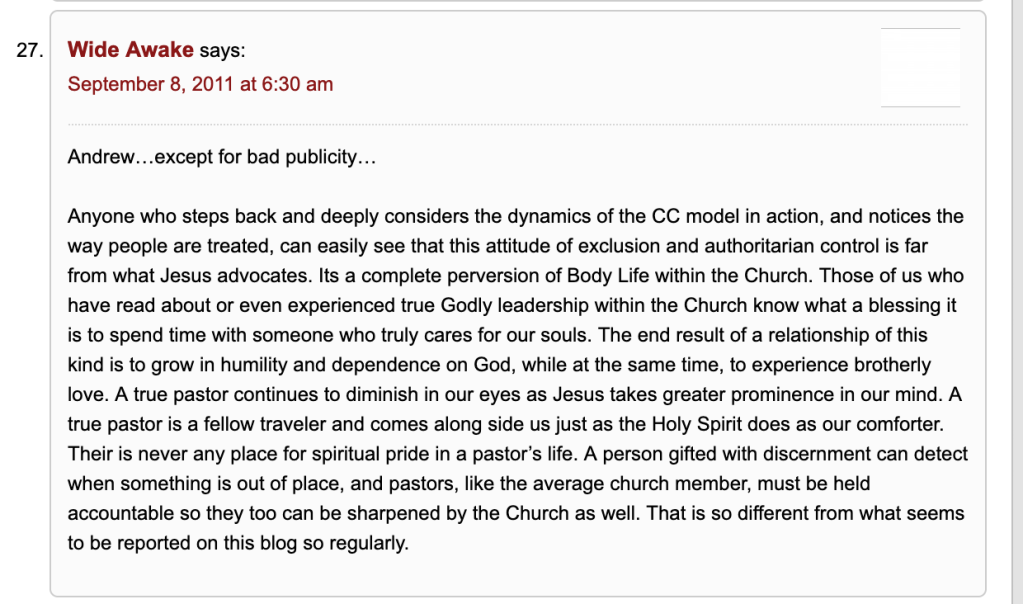
Screenshots of Google, Yelp and website user reviews previously visible as of July 2024, preserved for informational and historical context.
Resources for Understanding Spiritual Abuse, Church Power Dynamics, and Recovery
The following resources are provided for educational and informational purposes only. They are widely used by counselors, researchers, advocates, and survivors to better understand spiritual abuse, unhealthy power dynamics, and recovery after harm within religious settings. Inclusion does not imply endorsement or application to any specific individual or organization.
Rick Alan Ross – Warning Signs of Destructive Groups A widely cited educational checklist describing leadership behaviors and group dynamics commonly associated with high-control, coercive, or manipulative groups. Often used by therapists, researchers, and former members as an awareness tool.
Spiritual Abuse Institute Educational articles and survivor-focused resources addressing spiritual abuse, authoritarian leadership, and healing from religious harm.
International Cultic Studies Association (ICSA) Research-based information on undue influence, coercive control, and recovery, including materials relevant to high-demand religious groups.
⚖️ Ethics, Accountability, and Power Dynamics
National Association of Social Workers (NASW) Code of Ethics A widely recognized professional ethics framework addressing power imbalances, exploitation, informed consent, and the protection of vulnerable individuals.
Internal Revenue Service (IRS): Tax Guide for Churches and Religious Organizations (Publication 1828) An official IRS publication outlining expectations related to church governance, fundraising practices, and federal tax compliance for religious organizations.
GRACE (Godly Response to Abuse in the Christian Environment) Independent investigations, survivor advocacy, and educational materials addressing abuse of power within Christian institutions.
🛟 Support for Survivors of Church or Pastoral Abuse
Recovering from Religion Confidential support, peer groups, and educational resources for individuals harmed by religious environments, including authoritarian or coercive churches.
The Religious Trauma Institute Resources focused on religious trauma syndrome, recovery, and locating trauma-informed therapists familiar with spiritual abuse.
Journey Free Educational content and survivor resources addressing spiritual abuse, toxic belief systems, and healing after high-control religion.
🧠 Mental Health & Trauma-Informed Care
Psychology Today – Therapist Directory A searchable directory for finding licensed, trauma-informed therapists, including those experienced with religious trauma or spiritual abuse.
SAMHSA National Helpline Confidential mental health support and referrals for individuals experiencing emotional distress, trauma, or crisis.
📚 Educational Articles & Survivor Voices
Articles written by former members of high-control churches
Research on authoritarian leadership, undue influence, and religious coercion
Survivor narratives that help normalize experiences, reduce isolation, and support healing
🌱 Where to Start If You’re Feeling Overwhelmed
If you’re feeling confused, emotionally flooded, or unsure where to begin, that’s completely understandable. Many people encounter information about spiritual abuse while still processing grief, fear, or loss.
You don’t need to read everything at once. Consider starting with:
Support-oriented resources (such as peer support or trauma-informed counseling) to help you feel grounded.
General educational materials that explain spiritual abuse and unhealthy power dynamics at a high level, without focusing on any one church.
Taking breaks and returning to this information at your own pace.
Your well-being matters more than how quickly you understand everything.
📚 Recommended Reading on Spiritual Abuse & High-Control Leadership
(ordered from gentlest → most clinical)
The following books are shared for educational and informational purposes only. They are commonly referenced by survivors, advocates, researchers, and mental-health professionals to better understand spiritual abuse, coercive control, and recovery. Inclusion does not imply that any specific church, leader, or organization meets the criteria discussed in these works.
Shunned – Bonnie Zieman, MFT A compassionate, survivor-centered exploration of the emotional and psychological impact of shunning, religious rejection, and relational loss, with an emphasis on validation and healing.
Let Us Prey – Darrell Puls An accessible examination of patterns associated with narcissistic and authoritarian leadership in religious settings, written from a survivor-advocacy and accountability perspective.
Unmasking the Cults – Alan W. Gomes A theological and behavioral analysis of high-control religious groups, often referenced in discussions of undue influence, coercive authority, and spiritual manipulation.
Cracking the Cult Code for Therapists – Bonnie Zieman, MFT A trauma-informed clinical guide designed for therapists and survivors seeking a deeper understanding of the psychological effects of cultic or high-control religious environments and pathways to recovery.
These books offer language and frameworks, not diagnoses. Readers are encouraged to engage at their own pace and seek professional support when material feels intense or activating.
A Note to Survivors
If you are questioning a church experience, feeling confused, fearful, or harmed by religious authority, you are not alone. Seeking information is a valid and healthy step. Education can help restore clarity, agency, and hope.
Disclaimer:
All information, documents, screenshots, and materials shared on this website are provided for educational and informational purposes only. Screenshots and archived materials are presented to document how content appeared at specific points in time and are shared for historical context. Online content, reviews, and statements may change, be removed, or become unavailable for a variety of reasons.
The inclusion of any document, image, or reference does not constitute an allegation, conclusion, or determination of wrongdoing by any individual or organization. Statements attributed to third parties are presented as such and do not necessarily reflect the views or conclusions of this website.
If you believe that any information presented here is inaccurate or incomplete, you are encouraged to reach out so concerns may be reviewed. This website does not provide legal, medical, or professional advice.
Image Use Disclaimer: Images, screenshots, and archived materials on this website are presented for educational and informational purposes only. They are shared to document how content appeared at specific points in time and to provide historical context. Availability and presentation of online content may change for a variety of reasons. The inclusion of any image does not constitute an allegation, conclusion, or determination of wrongdoing by any individual or organization. All third-party content is attributed where reasonably possible.
Thank you for taking the time to read. This is my new coaching website. Sharing is caring!